


Adaptive Ising Machines: a paradigm combining oscillatory dynamics and probabilistic sampling

Place : IRIG/SPINTEC, auditorium 445 CEA Building 10.05 (presential access to the conference room at CEA in Grenoble requires an entry authorization. Request it before January 17 th at admin.spintec@cea.fr)
video conference : https://univ-grenoble-alpes-fr.zoom.us/j/98769867024?pwd=dXNnT3RMeThjYStybGVQSUN0TVdJdz09
Meeting ID: 987 6986 7024
Passcode: 025918
Abstract : The first part of the talk will focus on probabilistic computing which is one direction to implement Ising Machines with Probabilistic computing that is a computational paradigm using probabilistic bits (p-bits), unit in the middle between standard bit and q-bits. I will show how to map hard combinatorial optimization problems (Max-Sat, Max-Cut, etc) into Ising machine and how to implement those in spintronic technology. I will present new directions in this field considering the concept of extended probabilistic variables such as p-dit and p-int.
I will then discuss oscillatory Ising Machines dynamics with the aim of introducing the concept of Adaptive Ising Machines. For doing that, first I will discuss the universal theory of phase auto-oscillators driven by a bi-harmonic signal (having frequency components close to single and double of the free-running oscillator frequency) with noise showing how deterministic phase locking and stochastic phase slips can be continuously tuned by varying the relative amplitudes and frequencies of the driving components. I will then focus on how to use spin-torque nano-oscillators for implementing deterministic, probabilistic computing and dual-mode operation of Adaptive Ising Machines that dynamically combines both regimes within the same hardware platform by properly tuning noise strength and a bi-harmonic excitation.
Benchmarking on different classes of combinatorial optimization problems, the CoIM exhibits complementary performance as compared to OIMs and probabilistic Ising machines PIMs, with adaptability to the specific problem class. This work introduces the first oscillator-based Ising machine capable of transitioning between deterministic and probabilistic computation, opening a path toward scalable, CMOS-compatible hardware for hybrid optimization and inference.
This work was supported under the project number 101070287 — SWAN-on-chip — HORIZON-CL4-2021-DIGITAL-EMERGING-01, the project PRIN 2020LWPKH7 funded by the Italian Ministry of University and Research and by the PETASPIN association (www.petaspin.com) and it has been also funded by European Union (NextGeneration EU), through the MUR-PNRR project SAMOTHRACE (ECS00000022).
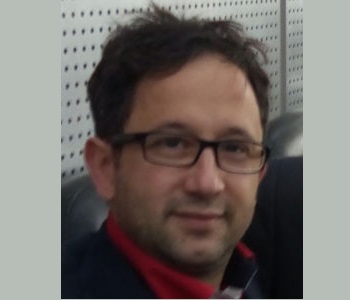
Biography : Giovanni Finocchio received the Ph.D. degree in advanced technologies in optoelectronic, photonic and electromagnetic modeling from the University of Messina, Italy, in 2005. He is full professor at the Department of Mathematical and Computer Sciences, Physical Sciences and Earth Sciences of the University of Messina and director of the PETASPIN laboratory (Petascale computing and Spintronics). His research interests include spintronics, skyrmions, and unconventional computing (https://scholar.google.co.uk/citations?user=eKDbn-oAAAAJ&hl=en). In the last 10 years, he served on many technical program committees of international conferences and organized more than 10 international conferences and workshops as Chair, Program Committee Member, or in other positions including program chair of the IEEE NANO 2024 and program co-chair of the 2025 joint Intermag-MMM conference. He is regularly invited at well-established conferences in Magnetism and Spintronics and he was the organizer of the first international conference on Ising Machines. He is also president of Petaspin association (www.petaspin.com), past AdCOM member of the IEEE Magnetics Society (2019-2024), chair of the TC-16 on Quantum, neuromorphic and unconventional computing of the IEEE Nanotechnology Council (NTC), past-chair of the IEEE Magnetics Italy Chapter (2019-2022) and Distinguish Lecturer of the IEEE Nanotechnology Council for 2026 and 2027. Since 2022, he is also associate editor of Physical Review Applied (APS).