

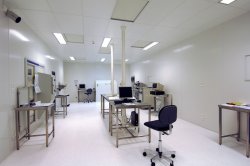
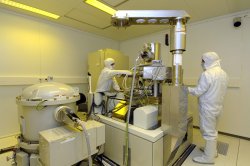
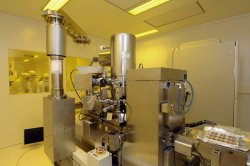
The PTA, Up-line Technological Platform, is a 1000 class clean room resulting from pooling of the technical and human resources of the INAC (ex-DRFMC) and the FMNT (Federation of Micro and Nano Technologies) grouping laboratories from the CNRS, CEA, INP and UJF (LTM, IMEP, SPINTEC, LMGP, systems activities of the G2E-lab). The clean room extends over 350 m² in Building 10.05 and occupies 140 m² in the BCA-INP building (in the CIME clean room, CIME standing for the InterUniversity MicroElectronics and nanotechnologies Centre).
The PTA meets the specific requirements of Grenoble up-line research in terms of technological and technical facilities dedicated to nanosciences in the micro- nanotechnologies field. Its various methods and equipment facilities for lithography, deposition or etching thus enable integration of nano-objects and nano-materials or patterning of thin layers in the nanometric range. The PTA can accommodate all types of substrates from the 5 x 5 mm² sample up to the 4″ wafer as well as all types of materials.
The research fields developed here are numerous: nanoelectronics, MEMS & NEMS, magnetism and spintronics, integration of nano-materials and nano-objects, photonics, … The purpose of the platform is to accompany researchers not only in the technological developments necessary for their research, but also to promote collaboration and partnerships with outside laboratories at national and international level.
Flexibility and ease of access and use are the cornerstone of management of the PTA. This pooling of facilities between the major players of fundamental research in Grenoble means that an original management and administration system had to be set up for the platform run by the INAC and the FMNT. The operating overheads of the PTA are supported by the user laboratories.

The team







Recent news
- Unveiling the heart of magnetic memory cells thanks to electron holography (November 10th, 2020)

Magnetic spintronic memory called STT-MRAM have recently entered in volume production at major microelectronic foundries. The research in this area is now focused on preparing the future memory generations with higher capacity, higher speed, lower ... - All-optical switching of magnetization in Tb/Co-multilayer based electrodes (April 30th, 2020)
This work reports the development of perpendicular magnetic tunnel junctions incorporating a stack of Tb/Co nanolayers whose magnetization can be all-optically controlled via helicity-independent single-shot switching. Toggling of the magnetization of the Tb/Co electrode was ... - Spintronic memristor based on an isotropically coercive magnetic layer (December 03rd, 2019)
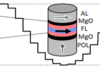
We propose an original concept of spintronic memristor based on the angular variation of the tunnel magnetoresistance (TMR) of a nanopillar comprising several magnetic layers. We have experimentally developed the appropriate magnetic free layer and ... - Magnetic control of optical responses of biocompatible magneto-elastic membranes (August 29th, 2019)
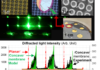
Numerous studies investigated the use of synthetic membranes for photonic or biomedical applications. We report here on a recent type of biocompatible magnetically actuated membranes, partly originating from studies on magnetic particles for biology, consisting ... - Impact of heating on the stability phase diagrams of perpendicular MTJs (February 19th, 2019)
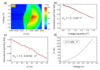
Measured switching diagrams of perpendicular magnetic tunnel junctions exhibit unexpected behavior at high voltages associated with significant heating of the storage layer. The boundaries deviate from the critical lines corresponding to the coercive field, which ...
