
Quantum spintronic devices with non-Hermitian topology (September 15th, 2026)

Quantum spintronic devices with non-Hermitian topology Multi-terminal quantum Hall devices with non-Hermitian topology are highly-sensitive cryogenics sensors with quantized properties robust against imperfections. In collaboration with RIKEN-CEMS & IFW Dresden, we have shown the record sensitivity of such quantum sensors built from magnetic topological insulators, operating at higher temperatures than devices solely based on the […]
Read moreDzyaloshinskii-Moriya interaction chirality reversal with ferromagnetic thickness (September 04th, 2026)

In Ta/FeCoB/TaOx, it was demonstrated that the Dzyaloshinskii-Moriya interaction (DMI) chirality can undergo modification solely in response to variations in the thickness of the ferromagnetic layer. This inversion of chirality is attributed to variations in orbital filling and interatomic distances at the interface, driven by the structural relaxations in the ultrathin regime. This method provides […]
Read moreHigh-temperature ferromagnetism in 2D (August 28th, 2026)
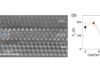
Van der Waals magnets are typically limited to low-temperature and multilayer form. Here, we first demonstrated room-temperature ferromagnetism in thicker Co-doped Fe₅GeTe₂ films, then achieved ferromagnetism up to ∼200 K in epitaxial monolayers, a breakthrough for two-dimensional spintronics. Two-dimensional (2D) van der Waals (vdW) magnets are highly sought after for their potential in spintronics. Their […]
Read moreSpin waves in cylindrical magnetic conduits: from theory to experiment (July 27th, 2026)
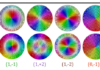
Spin waves are propagating fundamental excitations of magnetic systems, also carrying promises for low-power logic and data transfer. We report the measurement of thermal spin-wave spectra in single cylindrical nanowires, and their quantitative analysis as modes with a radial and azimuthal index. This opens the route for more elaborate investigations including generation, manipulation and detection. […]
Read moreOpening Postdoctoral Position: New Paradigms in Spintronic Fluctuations (July 23rd, 2026)

Position: The project FLUSPIN is opening a 12-month position (possible extensions) for a postdoctoral researcher to explore the integration of Kramers-type thermal activation theories—validated for equilibrium conditions in superparamagnetic systems—with a functional calculus approach. This approach extends the Fokker-Planck equation (FPE) to magnetization dynamics under colored noise, moving beyond the usual Markovian approximations. By incorporating […]
Read moreE pur si muove!* (July 23rd, 2026)
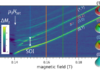
Angular momentum (AM) is the conserved quantity associated with rotational invariance. Harnessing its orbital component in axi-symmetric sample is often challenging. Interestingly, we show that azimuthal spin waves in normally magnetized disks are largely immune to imperfections that would otherwise prevent the wavefront from orbiting around the disk. * “And yet it moves!” is the […]
Read moreMagnetic vortex micro-disks dynamics in viscoelastic environments (July 15th, 2026)
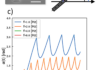
Magnetically driven microparticles provide a versatile platform for probing and manipulating biological systems. Yet the physical framework governing their actuation in complex environments remains only partially explored. In this work, we introduced a simplified model describing the magneto-mechanical response of such particles embedded in viscoelastic media under varying magnetic fields. For several years now, the […]
Read morePulse Shaping Suppresses Intrinsic Back-Switching in SOT-MRAM (July 05th, 2026)
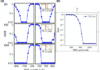
Spin–orbit-torque (SOT) MRAM writing exhibits an unusual current dependence: at high current amplitudes, the write probability can drop to zero or even oscillate as the current increases. In collaboration with Antaios, we showed that this behavior originates from an intrinsic, largely deterministic back-switching mechanism, and we demonstrated that tailoring the pulse fall time significantly widens […]
Read more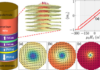
Magnetic field sensors are widely used for contactless current measurement, as well as in the automotive and robotics industries for position encoding. Vortex sensors are particularly attractive for these applications because of their linear response and weak temperature dependence. Conventional vortex sensors are sensitive to magnetic fields applied in the sensor plane. We developed a […]
Read moreWorkshop on Microwave Spintronics in Grenoble (January 09th, 2026)
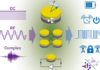
1st Workshop on Microwave Spintronics for smart communication systems: energy harvesting, communication, security, edge computing When: 29-30 January 2026 Where: Amphitheatre Berges, GReeN-ER, Grenoble INP -UGA, Grenoble, France Registration deadline: 15 January 2026 (registration is free of charge) Workshop website: https://spincomworkshop.sciencesconf.org/ More information: flyer
Read more