
Recruiting a PhD to develop a skyrmion-based magnetic field sensor (May 12th, 2023)
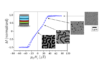
Position: Skyrmions are circular magnetic domains of (sub-)micron size with increasing interest to the scientific community, considering to use them for information encoding. The aim of this thesis is to exploit the potential of skyrmions in a new way: developing a magnetic field sensor. Indeed, the response of skyrmions to the magnetic field perpendicular to […]
Read moreFour years engineer researcher position (May 12th, 2023)
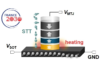
Spintec laboratory is opening a four years engineer researcher position in the framework of the PEPR electronics (part of France 2030 strategy) – project EMCOM (emerging memories for computing). Context: The cost of transferring information between different layers of storage and computing units now dominates the energy performance of conventional processors. This has created […]
Read more[POSITION FILLED] PhD grant: exploring new designs addressing fabrication and read/write bottlenecks of Perpendicular-Shape-Anisotropy MRAM (April 13th, 2023)

Position: The objective of the PhD project is to explore disruptive fabrication routes, cell and material designs to lift the two bottlenecks, related to fabrication and efficiency of the write operation with a spin-polarized current. While the motivation and objective is to give a real application potential to the proof of concept achieved so far, […]
Read moreRecruiting a 24 month Fixed Term R&D Engineer on developing magnetic materials and stacks for Spintronics (March 13th, 2023)

Context: SPINTEC opens a R&D Engineer position for developing magnetic multilayer stacks on a new fully automated ultra-high vacuum sputtering tool for 100 mm wafers, developed in-house. The work will be carried out within the “Materials” team and in a close collaboration with researchers, PhDs and postdoctoral fellows. Position: The mission will consist in: discussing […]
Read moreMicromagnetics of chemical modulations in cylindrical nanowires (February 09th, 2023)
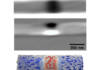
We combined chemical synthesis, magnetic microscopy and micromagnetic simulations to provide a comprehensive view of the micromagnetics of chemical modulations in cylindrical nanowires. This sets the ground for their use to investigate the specific aspects of domain-wall dynamics and spin waves in a curvilinear system. Curvilinear and three-dimensional magnetism are a fast-developing field, considering […]
Read moreVibrating magnetic microparticles to stimulate insulin secretion (February 09th, 2023)
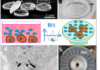
In the context of intensive research on treatments against diabetes – major health threat to millions of people, we report here on an innovative approach based on mechanobiology. Basically, chronic hyperglycemia is regulated by a supply of insulin, if insufficiently secreted. We show here that the mechanical stimulation of pancreatic beta cells, via the […]
Read more[POSITION FILLED] Postdoctoral position on RF spintronics for IoT (February 09th, 2023)
Context: In the frame a European project, SPINTEC has an opening for a postdoctoral position to develop rf detectors for IoT applications. The project goal is to improve the rf-to-dc conversion efficiency of specific magnetic tunnel junctions and to develop demonstrator applications. Position: The tasks are varied and will allow to acquire diverse expertise in […]
Read more[Filled] Assistant Professor position – Design of spintronic circuits for artificial intelligence (February 03rd, 2023)
SPINTEC is opening a tenured assistant professor/lecturer position in the field of frugal digital electronics, design of embedded systems, design of digital architectures in disruptive technologies (MCF section 61-63). The recruited person will carry out his research at SPINTEC Laboratory affiliated with UGA, CEA, CNRS, Grenoble INP-UGA in a very promising field, linked to […]
Read moreWaking-up wireless sensor nodes with perpendicular magnetic tunnel junctions (December 19th, 2022)

Spin-torque-nanodiodes based on magnetic tunnel junctions are promising candidates for RF energy harvesters and ultra-low power wake-up receivers with performances that are expected to surpass those of semiconductor diodes. Experiments on magnetic tunnel junctions with perpendicular magnetic anisotropy show how the performances can be optimized upon reducing the magnetic layer thickness and the device […]
Read moreSpintronic Memristor based Binarized Ensemble Convolutional Neural Network (December 15th, 2022)
We have investigated the use of spintronic devices to enable the implementation of a Binary Ensemble Convolutional Neural Network. A simulation flow has been setup and allowed to evaluate this disruptive combination and very promising results have been obtained in terms of hardware optimization and power reduction. The use of emerging technologies has been […]
Read more