
Two years post-doctoral position on modelling of all optical switching using light carrying orbital momentum (June 23rd, 2022)
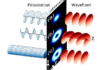
SPINTEC is opening a 2-year post-doctoral position on modelling of all optical switching using light carrying orbital momentum Context: The manipulation of magnetization by ps or fs light pulses has become a very exciting topic nowadays opening routes towards ultrafast magnetization control. To date, most of the light-spin interaction studies made use of spin angular […]
Read more20th anniversary of SPINTEC (May 06th, 2022)

SPINTEC is celebrating its 20th anniversary in 2022. We will celebrate this anniversary by organizing a dedicated day on May 10, 2022, retracing this scientific and human adventure. The event will bring together, at the Minatec amphitheater in Grenoble, laboratory staff, present or alumni, institutions, colleagues from other laboratories, industrial partners. For this special occasion, […]
Read morePhD position — Spin manipulation by chiral phonons (April 08th, 2022)

Description of Group/Project: A joint program between the Université Grenoble-Alpes and the University of Tokyo seeks to appoint a creative and motivated experimental Ph.D. student to participate in an ongoing project on spin manipulation by chiral phonons. The position will be funded by the LANEF chair of excellence, Prof. YoshiChika Otani, which brings together leading […]
Read moreDesigning magnetic memory with improved retention and writability (April 08th, 2022)
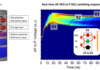
Magnetic Random Access Memory recently started to be commercialized by all main microelectronics factories. In MRAM, the information is coded via parallel or antiparallel magnetic configurations to represent ones and zeroes. The technology is intrinsically nonvolatile, meaning it can keep information without being electrically powered. However, nonvolatility often comes with a trade-off between the information […]
Read moreBiocompatible magnetic microparticles for cancer cells destruction (February 04th, 2022)
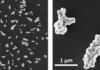
We present a new type of biocompatible surface-functionalized magnetic microparticles for cancer cells destruction. The magnetite particles, covered with polyethylene glycol molecules, are shown to favor cell-death via apoptosis when set into vibrations by alternating magnetic field. A team from SPINTEC, in collaboration with researchers from SyMMES, has recently developed a new type of […]
Read moreSTOCHNET – An ANR project (December 09th, 2021)
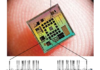
STOCHNET stands for Hybrid Stochastic Tunnel Junction Circuits for Optimization and Inference. The motivation behind StochNet is to explore — through experimental demonstrations with hybrid CMOS stochastic tunnel junction circuits and simulations of theoretical architectures — the technological feasibility of recently explored brain inspired computing frameworks that point towards neural stochasticity as being fundamental to […]
Read more24 months postdoc position – spintronic unconventional computing using stochastic magnetic tunnel junctions (December 02nd, 2021)
In the frame of the joint US-French NSF-ANR project StochNet, Spintec laboratory is opening a postdoctoral researcher position. The candidate will work on stochastic magnetic tunnel junctions grown and fabricated at Spintec, and will use them to explore brain-inspired schemes promising for building energy-efficient computing hardware. The project will have a strong interdisciplinary aspect (Spintronic, […]
Read moreA new spintronic memristive component for neuromorphic circuits (November 18th, 2021)
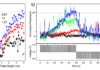
Neuromorphic computing is a bio-inspired technology which aims at mimicking the brain working principles. It can be used for fast and energy-efficient applications through the implementation of networks of artificial neurons and synapses. Artificial synapses are implemented as electronic components called memristors. These are non-volatile memory devices whose resistance can take several intermediate values between […]
Read moreSpin diffusion length of thermal magnons (November 15th, 2021)
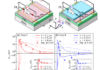
Using the spin Seebeck effect (SSE), we study the short-range propagation distance of thermally-induced spin currents inside insulator magnetic thin film. We find the spin diffusion length of thermal magnons (magnons carrying quanta of energy, kBT) is is in submicron range. The vision of spintronics is to use the spin of an electron rather […]
Read morePhD defense – Exploring novel spin and charge transport mechanism in ferromagnetic and antiferromagnetic spin structures and spin textures (November 09th, 2021)

On Tuesday, November 30th at 13:30, M. Rafael LOPES SEEGER will defend his PhD thesis entitled: Exploring novel spin and charge transport mechanism in ferromagnetic and antiferromagnetic spin structures and spin textures Place : CEA Bat. 10.05 Room 445 Skype link (**) : https://webconf.cea.fr/vincent.baltz/GLJRQRZK Abstract: The emerging field of antiferromagnetic spintronics consists in exploring spin-dependent […]
Read more