
Review – Oxide spin-orbitronics: spin-charge interconversion and topological spin textures (April 26th, 2022)
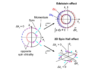
F. Trier, P. Noël, J.-V. Kim, J.-Ph. Attané, L. Vila & M. Bibes✉, Nature Reviews Materials 7, 258 (2022). In this Review, the recent advances in the new field of oxide spin-orbitronics including the control of spin–orbit-driven effects by ferroelectricity are surveyed, and the future perspectives for the field are discussed. Oxide materials possess […]
Read more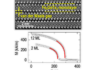
Van der Waals (vdW) layered magnets are promising materials to develop ultracompact and multifunctional spintronics devices. However, most of them are magnetic only at low temperature and are almost exclusively studied in the form of small flakes obtained by mechanical exfoliation. Here, we demonstrate the direct growth by molecular beam epitaxy of Fe5GeTe2, a room […]
Read morePlaidoyer pour la spintronique (January 28th, 2022)
Les Échos publie la tribune de Victoire de Margerie, fondatrice et vice-présidente du World Materials Forum, portant sur la spintronique et la nécessité d’industrialiser cette technologie de rupture pour gérer l’accroissement de données en limitant les dommages sur la planète. Technologie basée sur la rotation d’une particule sans consommation d’énergie, la spintronique pourrait “remplacer les […]
Read moreRoom-temperature ferroelectric switching of spin-to-charge conversion in GeTe (November 30th, 2021)
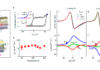
The broken inversion symmetry of some semiconductors may allow for spin–charge interconversion, but its control by electric fields is volatile. This has led to interest in ferroelectric Rashba semiconductors, which combine semiconductivity, large spin–orbit coupling and non-volatility. Here we report room-temperature, non-volatile ferroelectric control of spin-to-charge conversion in epitaxial germanium telluride films. Spintronics could potentially […]
Read moreDzyaloshinskii–Moriya Interaction and Skyrmion States at 2D Materials/Co Interfaces (November 25th, 2021)
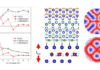
Significant Dzyaloshinskii–Moriya interaction (DMI) and perpendicular magnetic anisotropy (PMA) at interfaces comprising hexagonal boron nitride (h-BN) and cobalt (Co) remaining stable over a large range of Co film thickness are reported. Furthermore, it is demonstrated that that such significant DMI and PMA give rise to the formation of skyrmions with small applied external fields. Interfacial […]
Read moreSMART DESIGN – ERC Starting Grant (October 29th, 2021)
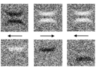
The rapid development of information technology (IT) has had profound consequences on most aspects of our civilization. However, the energy consumption associated to IT continues to rise at an accelerated pace. In this context the microelectronics industry faces major challenges related to power dissipation and energy consumption. A promising solution is the integration of non-volatile […]
Read moreIntroductory Course on Magnetic Random Access Memory (InMRAM 2021) (October 08th, 2021)

This introductory course aims at helping students, researchers and engineers having little or no background in magnetism to better understand the physics and working principles of this new class of magnetic memory called MRAMs (Magnetic Random Access Memory) based on magnetic tunnel junctions. MRAM and particularly the STT-MRAM (Spin-Transfer-Torque RAM) are attracting an increasing interest […]
Read more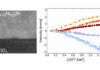
We report very large spin transfer torque driven domain wall velocities, approaching 3000 m/s, in rare-earth free ferrimagnetic Mn4-xNixN thin films close to the angular momentum compensation point. We also observe a reversal of the domain wall motion direction after the angular momentum compensation point. The interest towards ferrimagnets has recently grown because of their […]
Read moreReview – Roadmap of spin-orbit torques (June 01st, 2021)
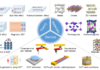
Q. Shao, P. Li, L. Liu, H. Yang, S. Fukami, A. Razavi, H. Wu, K. Wang, F. Freimuth, Y. Mokrousov, M. D. Stiles, S. Emori, A. Hoffmann, J. Åkerman, K. Roy, J.-P. Wang, S.-H. Yang, K. Garello, W. Zhang, IEEE Transactions on Magnetics, doi: 10.1109/TMAG.2021.3078583. Spin-orbit torque (SOT) is an emerging technology that enables the […]
Read moreSustainability analysis of perpendicular anisotropy magnetic memory and platinum substitution (May 11th, 2021)
Perpendicular anisotropy Magnetic Random Access Memory (MRAM) can contribute reduced power consumption in electronic circuits. These spintronic devices also rely on materials like Co, Pt and Ru, having associated supply risk or environmental impact. A sustainability analysis of these devices shows, that the impact of the wafer substrate is much larger than that of the […]
Read more